

What a Budget Actually Is (and What It Is Not)
A budget is a plan for your money, not a punishment for having spent it. When you are first learning how to budget money for beginners, the single most useful shift is to stop treating a budget as a test you can fail. It is simply a tool that shows you where your dollars go so you can decide where they should go instead.
You do not need special software or a finance degree to start. You need your real numbers and a willingness to look at them. That is the whole foundation.
A budget does not control your life. It gives you the information to make your own choices on purpose instead of by accident.
Why Beginners Stall Before They Start
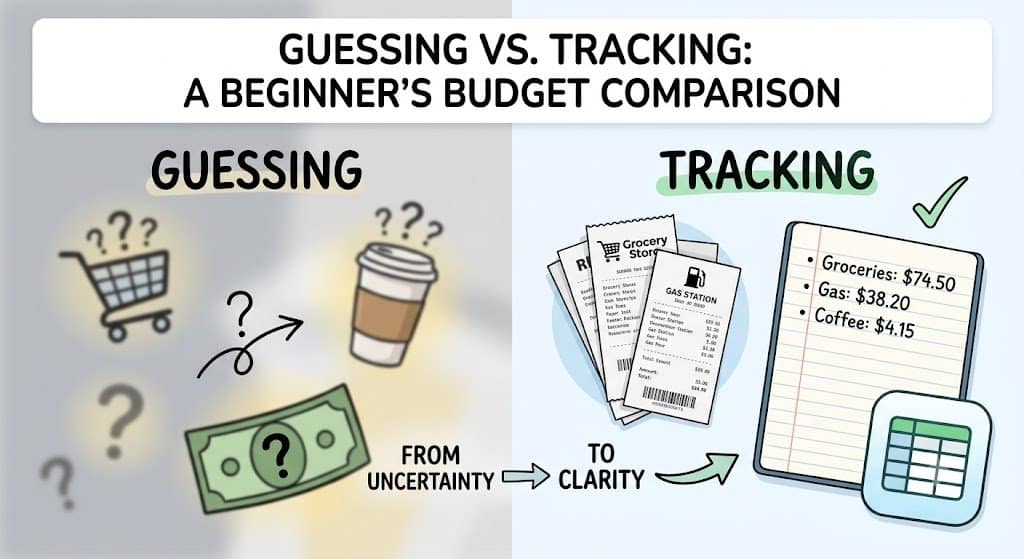
Most people stall for the same reason: they are afraid of what the numbers will show. So they guess, feel vaguely guilty, and never write anything down. That avoidance costs more than the truth ever would.
Money stress is widespread, so if this feels heavy, you are in good company. In its 2024 survey, the Federal Reserve found that only 63 percent of adults said they could cover a surprise 400 dollar expense using cash or its equivalent, meaning more than a third could not. The point is not to scare you. It is to show that a thin cushion is normal and fixable, and a budget is step one.
Step One: Find Your Real Monthly Income
Start with the money you actually keep, not your salary on paper. Write down your take-home pay after taxes and deductions for one month. This is the number your budget is built on.
If you are paid every two weeks, you receive two paychecks most months and three in two months of the year. To keep things stable as a beginner, budget on the assumption of two paychecks, and treat the extra one as a bonus for savings or debt.
Budget from your take-home pay, not your gross salary. Building a plan around money that goes to taxes is the fastest way to come up short.
What to Do With Irregular Income
If your income changes month to month, from tips, gig work, or variable hours, base your budget on your lowest typical month. When you earn more, that surplus goes straight to savings or debt. This way a slow month does not break your plan.
Step Two: List Fixed and Variable Expenses
Next, separate what you spend into two groups. Fixed expenses are the bills that stay roughly the same every month and arrive whether you want them or not. Variable expenses move around based on your choices.
Fixed expenses usually include:
- Rent or housing payment
- Utilities and phone
- Insurance premiums
- Car payment
- Minimum student loan and debt payments
Variable expenses usually include:
- Groceries and household supplies
- Gas and transportation
- Eating out and coffee
- Subscriptions and entertainment
- Personal and miscellaneous spending
Be honest with the variable numbers. If you spend roughly 60 dollars a week on takeout, write 60 dollars, not the 25 dollars you wish it were. You are collecting data right now, not grading yourself.
Step Three: Track Everything for One Month
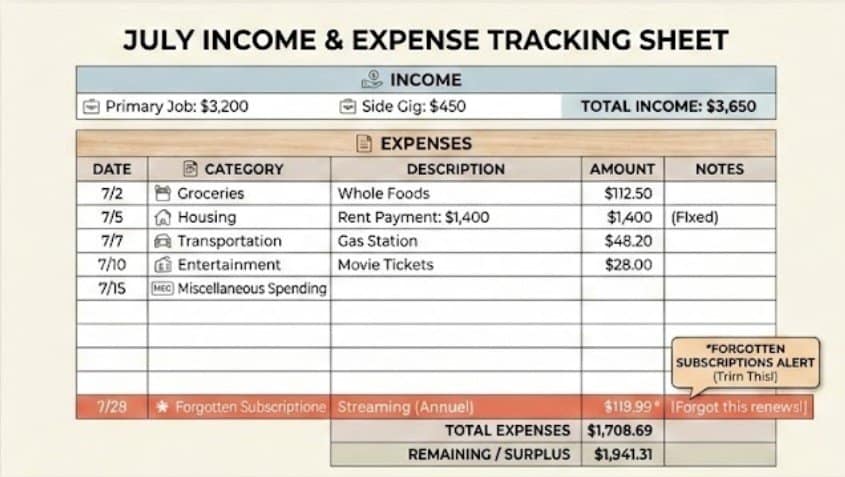
For your first month, the goal is to learn how to budget money for beginners by watching your real spending in real time. Record every purchase, whether you use a notes app, a spreadsheet, or a receipt in your pocket. The tool matters far less than the habit.
Tracking surfaces patterns you cannot see otherwise. Maybe forgotten subscriptions quietly add up to 40 dollars a month. Maybe groceries run high because you shop without a list. These are not failures; they are simply facts you can now act on.
For more on building simple budgeting habits and tactics, RSM has a dedicated guide worth reading alongside this one.
You cannot fix what you cannot see. One honest month of tracking is worth more than a year of guessing.
Choosing a Tool You Will Actually Use
Some people love an app that connects to their bank and sorts spending automatically. Others do better with a plain spreadsheet or pen and paper because the manual entry keeps them aware. Pick the one you will open again next week. Consistency beats sophistication every time.
Step Four: Give Your Goals a Place in the Plan
A budget without goals is just arithmetic. Goals are the reason you keep going when the process feels slow. They do not need to be huge; they need to matter to you.
Write down one or two goals you could reach in the next three to six months. Saving a 500 dollar starter cushion, paying off one small card, or simply stopping overdrafts are all real, worthy goals. If a goal feels impossible, it probably is, so shrink it. You can always raise the target later.
Once you have your goals set, the next step is building an emergency fund to protect them. See our guide on building an emergency fund on a tight budget for a step-by-step plan.
Putting Your First Budget Together
Now combine the pieces. Subtract your fixed expenses from your take-home income, then your planned variable spending, then your savings and goals. If money is left over, assign it on purpose. If you come up short, this is the moment to adjust, trimming a variable category rather than ignoring the gap.
Your first attempt will be imperfect, and that is expected. Budgeting is a skill, and the early months feel clunky for everyone. If you want a second set of eyes on your first budget, a free RedSky Money coach can sit down with you and help you sort it out, with no judgment and no products to sell. You can book a free Discovery Call at any time.
Conclusion / Final Thoughts
Building your first budget comes down to three habits: know your real income, track your spending honestly, and tie your dollars to goals you care about. None of it requires perfection, only a willingness to look and adjust. Start with one month, learn what it shows you, and refine from there.
Ready to get your budget under control?
You do not have to figure out your first budget alone. Book a free Discovery Call with RedSky Money and we will build a plan that fits your income, your goals, and your real life.