
What Zero-Based Budgeting Means
Zero-based budgeting is a method where you assign every dollar of income to a specific category until your income minus your planned spending equals zero. Reaching zero does not mean you spent everything; it means you decided the purpose of every dollar, including the ones going to savings.
This matters most on a low income, where there is no slack to absorb a forgotten expense. When every dollar is already accounted for, fewer dollars slip away unnoticed.
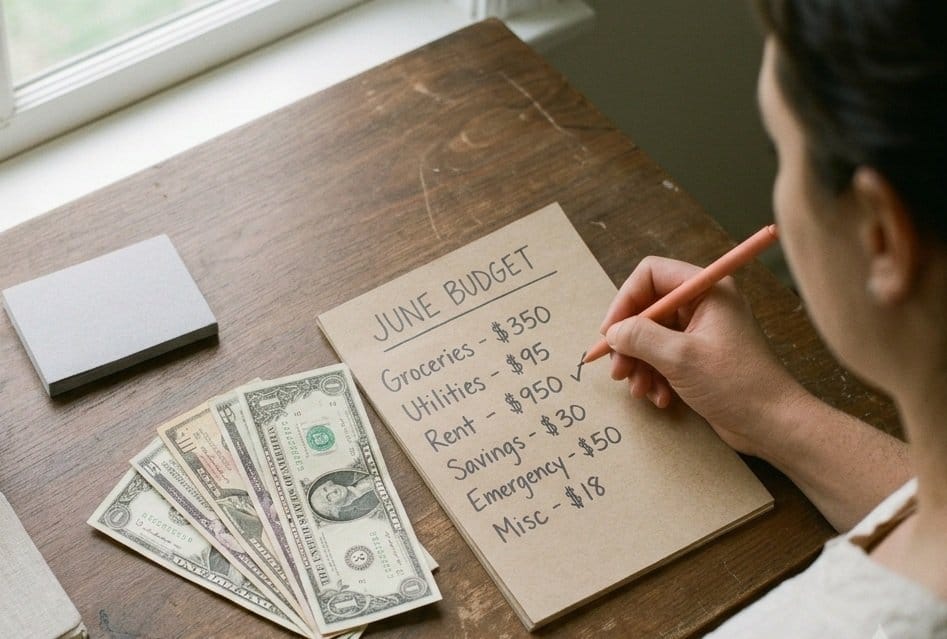
Zero-based budgeting is not about spending it all. It is about deciding, in advance, what each dollar is for, so nothing leaks out by default.
Why Tight Budgets Need a Tighter System
When income is low, the cost of an unplanned purchase is higher, because it has to come out of something essential. A structured plan protects the essentials. Financial strain is rising broadly, too: the FINRA Foundation’s 2024 National Financial Capability Study found that the share of adults who said they had no difficulty paying bills fell to 44 percent, down from 54 percent in 2021, and about 26 percent reported spending more than their income. A clear plan is how you stay on the right side of that line.
How to Build a Zero-Based Budget Step by Step
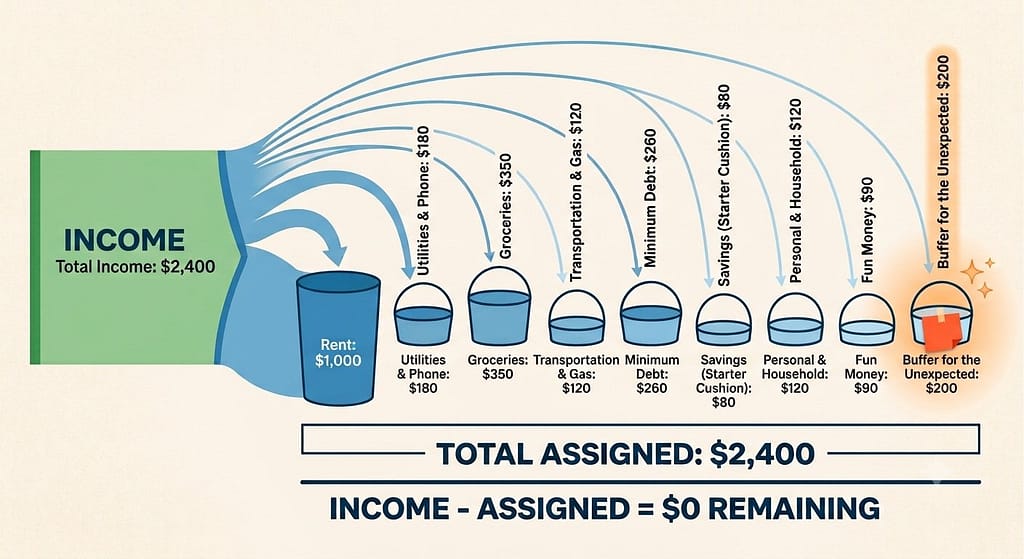
Start with your take-home income for the month. Then list every category you spend on, including irregular ones, and assign a dollar amount to each until you reach zero. Here is a sample built on 2,400 dollars of monthly take-home pay:
- Rent: 1,000
- Utilities and phone: 180
- Groceries: 350
- Transportation and gas: 120
- Minimum debt payments: 260
- Savings (starter cushion): 80
- Personal and household: 120
- Fun money: 90
- Buffer for the unexpected: 200
That allocation adds up to the full 2,400 dollars. Every dollar now has an assignment, and the buffer category absorbs small surprises so the rest of the plan stays intact.
If you are still working on the foundations, our guide on making your first budget as a beginner walks through every step before this one.
Adjusting When Something Comes Up
If an unexpected cost lands, you do not abandon the budget; you move money from one category to another and keep the total at zero. Maybe fun money shrinks this month to cover a higher utility bill. The plan flexes on purpose instead of breaking by accident.
Cover Needs First With Zero-Based Budgeting
On a low income, the order of operations matters. Needs are the things you cannot function without: housing, food, basic utilities, and transportation to work. Wants are everything else, and they fit into what remains after needs are funded.
This is not about never enjoying anything. It is about sequence. When needs are funded first, a tight month is uncomfortable rather than destabilizing.
When money is tight, fund needs before wants every time. Stability now buys you choices later.
Trim Variable Costs Without Feeling Deprived
Groceries are usually the easiest place to free up cash. Shop from a list and buy only what is on it, since impulse buys add up fast. Choose store brands for staples like rice, pasta, and canned goods, and cook in batches so lunches are covered for several days. None of this requires becoming a coupon expert; it just requires a little planning before you walk into the store.
Want a ready-to-use zero-based budget template plus low-income money tips? Join the RedSky Money email list and put every dollar to work.
Use Assistance Programs Without Shame
If your income barely stretches over your needs, look into assistance programs for food, utilities, healthcare, or housing. These programs exist precisely so people can bridge a gap while they work toward more income, and using them is a smart move, not a failure.
Local nonprofits, community centers, and government agencies can point you to what you qualify for in your area. A coach can help you map the options, too. If you want help building a plan that uses every resource available to you, a free RedSky Money coach can walk through it with you via a free Discovery Call.
Conclusion / Final Thoughts
Zero-based budgeting works on a low income because it removes guesswork: every dollar is assigned, needs come first, and a buffer absorbs the surprises. Add a few painless spending trims and any assistance you qualify for, and a tight budget becomes a stable one. Start with one month and refine the categories as you learn.
Ready to put every dollar to work?
Money is tight, but you do not have to stretch it alone. Book a free Discovery Call with RedSky Money and we will build a zero-based plan that fits your real income.