

No credit history is not the same as bad credit, and most first-time renters do not realize that distinction until they are already deep into a search. This post explains what landlords actually see when you have no credit file and gives you five concrete moves that can get you approved even without an established score. You will also leave with a clear starting point for building credit so every future application is easier.
Why Renting with No Credit History Is Different from Renting with Bad Credit
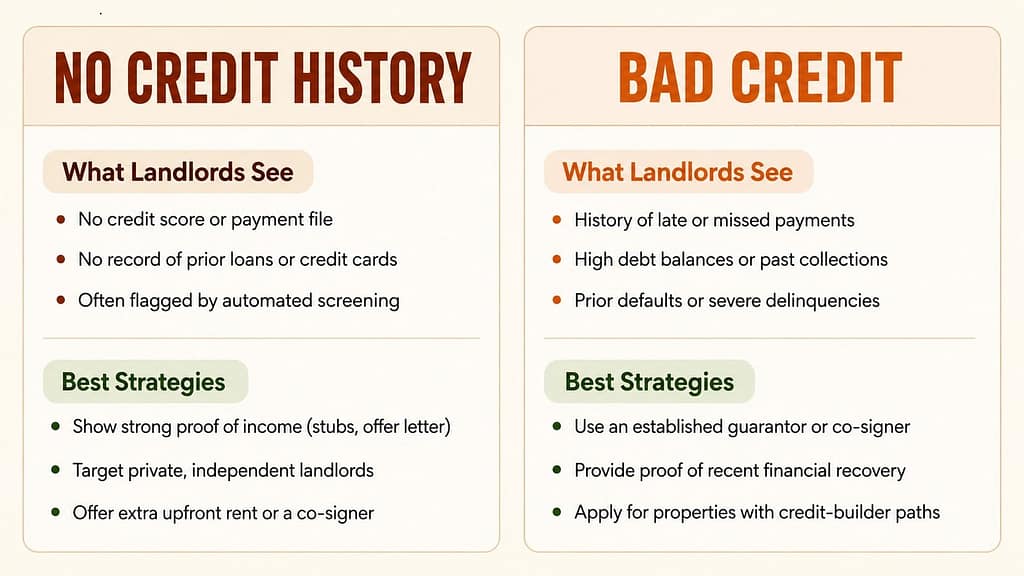
A bad credit score signals a history of missed payments, excessive debt, or financial defaults. No credit history simply means there is no record yet: no loans, no cards, no payment activity for a credit bureau to score.
Many landlords understand this distinction, particularly private landlords who review applications more holistically than large corporate property management companies do. A thin credit file with strong income documentation can be a better application than a low score with a history of delinquencies.
Experian’s 2023 State of Credit Report found that the average credit score for adults aged 20 to 29 is 660, placing that age group in the “fair” range. First-time renters starting from zero are not as far behind the qualification curve as they might assume.
The landlords most likely to reject a no-credit application are large corporate management companies using automated screening systems. Private landlords and smaller independent buildings are a much better audience for applications that need human context.
Five Moves That Help You Rent an Apartment with No Credit History
There is no single fix for a missing credit file, but five moves combined can meaningfully shift a landlord’s decision in your favor.
1. Show strong income documentation.
Pay stubs, an offer letter, or three months of bank statements showing consistent deposits all give a landlord something concrete to evaluate. The income threshold most landlords use is 2.5 to 3 times the monthly rent. If you can demonstrate that you clear that bar cleanly, a missing credit score becomes a smaller concern.
2. Offer additional upfront payment.
Offering two or three months of rent at signing reduces the landlord’s financial risk in a direct and visible way. Not every landlord will accept it, but it converts your reliability case from words to dollars.
3. Bring a co-signer or guarantor.
A co-signer with an established credit history agrees to be responsible for the rent if you cannot pay. This is often a parent or trusted relative. Before asking anyone to co-sign, have an honest conversation about what the commitment involves, show them the lease, and confirm they understand it fully. It is a meaningful financial favor; treating it that way protects the relationship.
4. Provide a strong non-credit reference.
A letter from your current employer, a college professor, or even a dorm resident advisor can substitute for a landlord reference when you have no prior rental history. Keep it professional, specific, and on letterhead when possible.
5. Focus your search on private landlords.
Individual landlords managing their own properties are significantly more likely to evaluate your full application than a large management company with automated screening filters. Search Facebook Marketplace and local rental boards alongside the major platforms and prioritize listings that appear privately managed.
How to Start Building Credit While You Search for Your Apartment
No credit history is a temporary condition. These two entry points are the most common, lowest-risk ways to start establishing a file without existing credit.
Secured credit card: You deposit a small amount, typically $200 to $500, as collateral, and that becomes your credit limit. Use it for small regular purchases, pay the balance in full every month, and your on-time payment history begins to build your score. Look for a card with no annual fee from a major bank or credit union.
Credit-builder loan: Offered by many credit unions and community banks, these small loans hold the borrowed amount in a savings account while you make payments. When the loan is paid off, you receive the funds. The payment history is what gets reported to the bureaus, not the loan amount itself.
Both options report to the major credit bureaus and can begin establishing a file within a few months. Starting now means your next apartment application benefits from an actual score rather than a blank page.
If you want to understand exactly where you stand and which path makes the most sense for your situation, a free RedSky Money coaching session can walk you through it. Book a free Discovery Call with a credentialed coach who will give you a clear, honest picture.
Conclusion: Your No-Credit Application Can Be Stronger Than You Think
No credit history does not have to stop your apartment search. The three things to remember: landlords distinguish between a thin credit file and a damaged one; your income documentation and references can carry significant weight; and a co-signer or upfront payment can close the approval gap when your credit file is too new to speak for itself. Start building your credit now and every future application will be easier.
Ready to build your credit and start your apartment search with confidence?
If you want a clear plan for building your credit and getting your financial life on track before your next apartment search, a free Discovery Call with RedSky Money is the right next step. Our coaches are CFPs and AFCs. There is nothing to buy and nothing to sign up for. Just honest, credentialed guidance built around your situation.
RedSky Money is a nonprofit. Our coaches are CFPs and AFCs, we sell no products, and coaching is always free.