
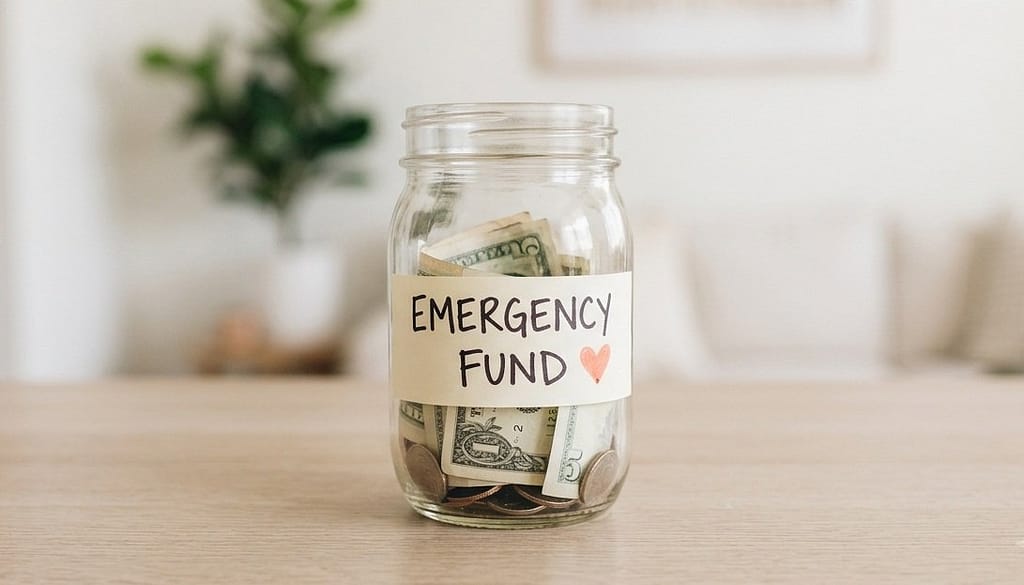
Why an Emergency Fund on a Tight Budget Comes First
An emergency fund is money set aside for the things you cannot predict: a car repair, a medical bill, a lost shift. It is not for vacations or impulse buys; it is the buffer that keeps a bad week from turning into new debt.
Most people are closer to that edge than they would like. Bankrate’s 2025 Emergency Savings Report found that only 41 percent of Americans could cover a surprise 1,000 dollar expense from savings, the lowest share since 2021. A starter cushion is what keeps a surprise bill off a high-interest credit card.
An emergency fund on a tight budget has one job: to stand between an unexpected cost and a new credit card balance.
Start With 500 Dollars, Not Six Months
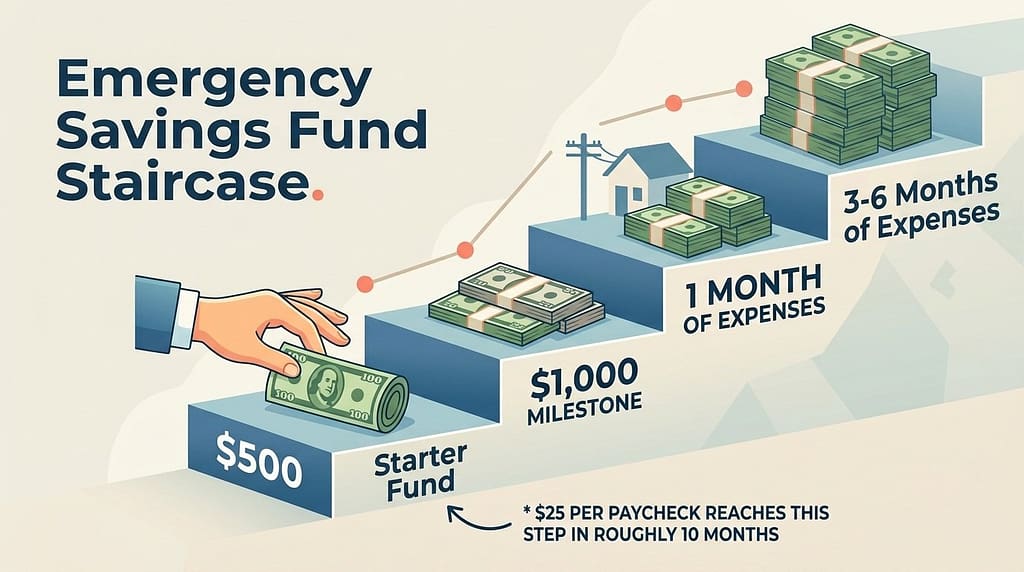
The classic advice to save three to six months of expenses is a great long-term target, but it is paralyzing when money is tight. So shrink the goal. Aim for 500 dollars first, then 1,000 dollars, then keep climbing once those feel solid. A reachable goal you hit beats a perfect goal you abandon.
How to Save When There Is Barely Room
On a tight budget, consistency matters more than size. Setting aside even 25 dollars a paycheck adds up steadily, and automating that transfer means you save before you have a chance to spend it. The amount can be small; the habit cannot.
Keep the money in a separate savings account, not your checking, so it is out of sight and harder to raid for everyday spending. A little friction between you and the cash is a feature, not a flaw.
If you are still working on getting a monthly budget in place first, our guide on how to budget money is the right place to start.
Use Sinking Funds So Surprises Are Not Surprises
A sinking fund is money you set aside a little at a time for an expense you know is coming but that does not hit every month. Think car maintenance, holiday gifts, an annual subscription, or a once-a-year insurance bill. These are predictable, so they should never raid your emergency fund.
The math is simple. If you expect to spend 600 dollars on holiday gifts in December, set aside 50 dollars a month starting in January, and the money is waiting when you need it. You glide through the expense instead of scrambling for it.
Your emergency fund is for the unpredictable. Sinking funds handle the predictable. Keeping them separate protects both.
Find Your Sinking Fund Categories
Scan your bank statements from the last several months and look for costs that appear a few times a year rather than monthly. Each one is a candidate for its own small sinking fund. Smoothing these lumpy expenses across the year is one of the simplest ways to keep a tight budget from tipping over.
Keep It Going With a Monthly Check-In
A budget and a savings plan are living documents, not one-time setups. At the end of each month, look at what happened: where you overspent, where you had room, and whether a surprise threw things off. Then adjust the next month’s plan based on what you learned.
These check-ins are also where you decide whether to nudge your savings transfer up by a few dollars. Small, regular adjustments are how a tight budget slowly loosens. If you want a partner for that process, a free RedSky Money coach can help you set a savings target that fits your situation via a free Discovery Call.
Conclusion / Final Thoughts
Building an emergency fund on a tight budget is about starting small and staying consistent: a 500 dollar first goal, automatic transfers you barely feel, and sinking funds that keep predictable costs from becoming crises. None of it requires a big income, only a system you revisit each month. Open a separate account today and send the first 25 dollars.
A safety net changes how every other money decision feels.
Book a free Discovery Call with RedSky Money and we will help you build an emergency fund that fits your budget, one small step at a time.