
The $400 wake-up call
The typical Gen Z adult has about $400 in emergency savings (Empower, 2025). That’s less than the cost of a flat tire and tow, or a single urgent-care visit with medication.
If that number sounds familiar, you’re in good company. Most people in their 20s and early 30s are still getting their financial footing. The good news is that you can build an emergency fund even when it feels like your paycheck is already spoken for. It’s not about how much you earn, but about starting with habits that work for you.
At RedSky Money, we help young professionals tackle real-world money challenges with simple, practical guidance that fits real life. Let’s break this down into three easy steps you can actually do.
Step 1: Redefine what an emergency fund really is
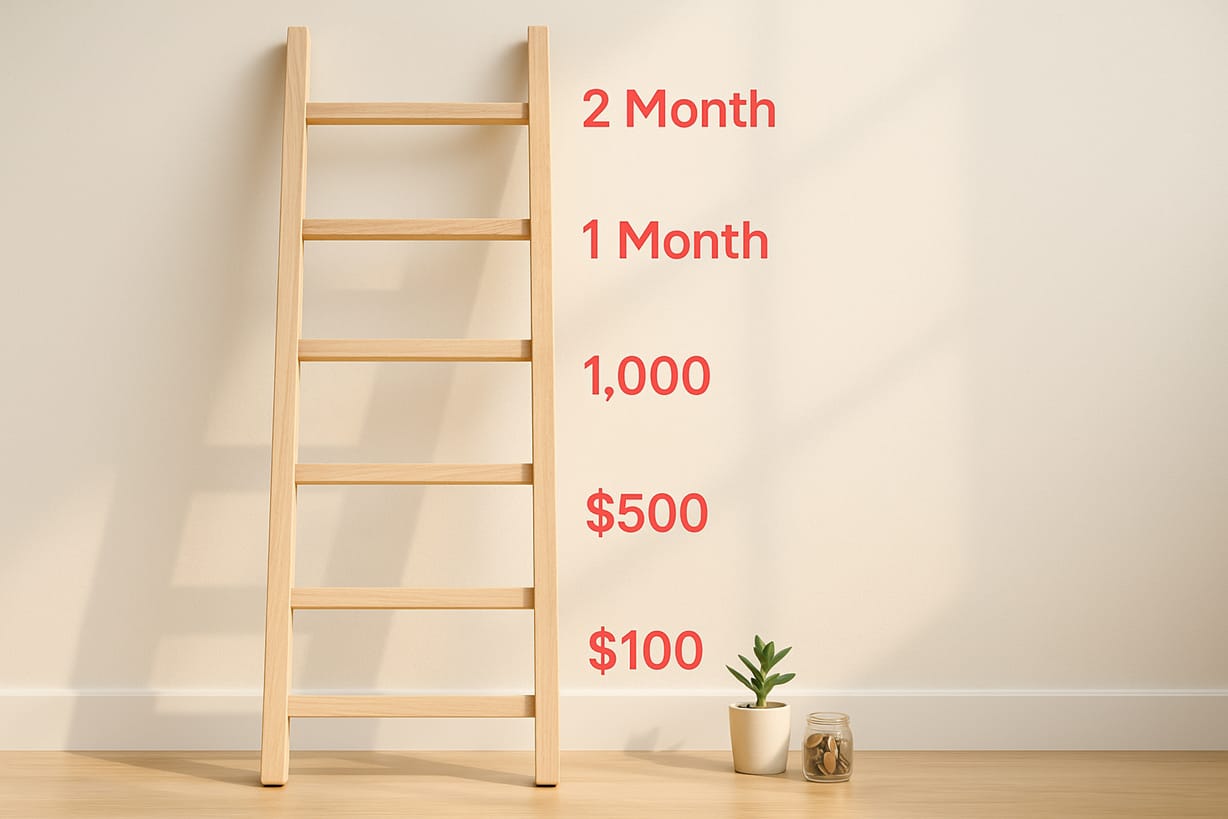
Most people hear “three to six months of expenses” and feel like that goal belongs in another galaxy. Instead, start with your first milestone of $500.
That amount is enough to cover a flat tire, a doctor visit, or a surprise bill. Once you reach it, aim for $1,000, then one month of rent, then two. Think of it as climbing a ladder instead of leaping a wall.
Try renaming your savings account to something motivating like “Peace of Mind Fund” or “Rainy Day Cash.” It helps your brain connect the dots between saving and feeling secure.
Step 2: Make savings automatic, even if it’s $5
Automation makes saving effortless. Set up a recurring transfer each payday, even for a small amount.
Five dollars every Friday? That’s $260 in a year.
Twenty dollars every payday? You’ll cross $500 before you know it.
The goal isn’t speed. It’s consistency. Once the transfer happens automatically, your fund grows without effort.
You can also turn on “round up” features in your bank app, where each debit card purchase is rounded to the next dollar and the spare change goes into savings. It’s like having a digital coin jar quietly working in the background.
Step 3: Find hidden dollars
If your budget feels tight, look for small opportunities instead of big sacrifices.
• Cancel or pause one small subscription. Even $10 a month adds up.
• Sell one unused item like old tech or clothes and put that money in your fund.
• Try a “no-spend weekend.” Cook at home, stream something you already pay for, or explore a local park. Whatever you don’t spend, move to savings.
Each small win helps build confidence. You’ll start to see your fund grow and feel less anxious when life throws surprises your way.
The 30-day challenge
Want a quick win? Try saving $100 in 30 days. That’s $25 a week, or about $3 a day. Use a note on your fridge or a phone tracker to keep score. When you hit $100, give yourself a free reward like watching a sunrise or taking a relaxing walk. Then keep going.
Why it matters
An emergency fund is really about peace of mind. Knowing you can handle the unexpected helps you focus on your goals instead of your worries. It makes everything from paying down debt to planning your future feel more possible.
Your next step
You don’t need a raise to start your emergency fund. You just need your first $5 and a plan.
If you’d like a personalized money plan, RedSky Money offers free consultations to help you start strong on your financial journey.
You’ve got this. Your future self will thank you.